Eleanor The Great

Release date: 12 December 2025 (UK)
Director: Scarlett Johansson
Starring: June Squibb, Erin Kellyman, Rita Zohar, Jessica Hecht, Chiwetel Ejiofor
Producers: Scarlett Johansson, Keenan Flynn, Jessamine Burgum, Kara Durrett, Jonathan Lia, Trudie Styler, Celine Rattray
Executive producers: Justin Baldoni, Jamey Heath · See more
Running time: 1h 38m
Production companies: Maven Screen Media, These Pictures, Pinky Promise
Here is another film with an inexplicable title. Is there some well known historical figure known as Eleanor the Great? Are we supposed to think the woman in this film is great? (My hot take is that she is not great.) What on earth is this title supposed to convey about this film? I am baffled. Having said that, we’re really in the thick of this baby business now, so it’s possible Eleanor the Great is a really well known obvious person and half of my brain has fallen out of my head during my very brief hours of sleep. If this is the case, please just don’t let me know.
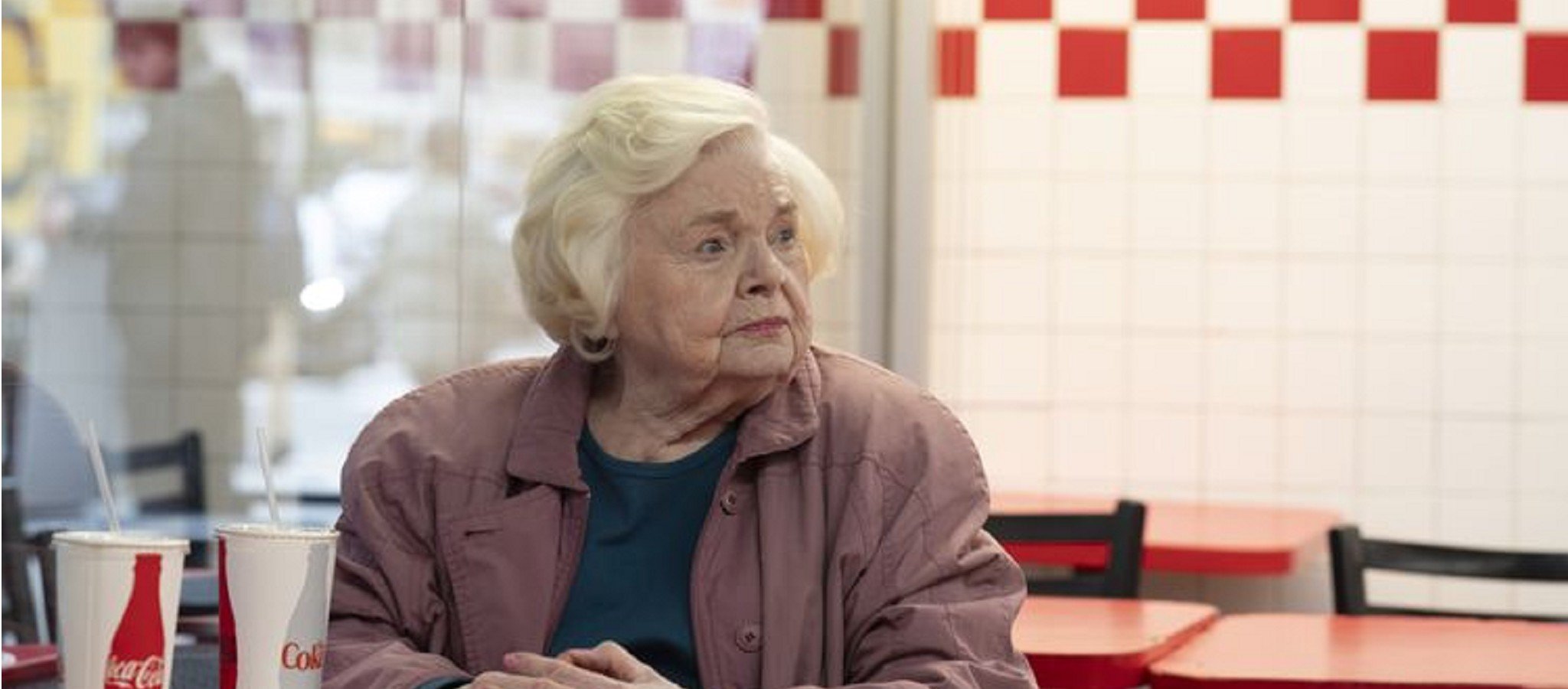
Is she actually that great though?
Right, so here we are with the classic, time honoured plot device of ‘someone steals someone else’s identity in order to date someone/make a connection/feel valid in the world.’ I’ve only realised how prevalent this plot is since I went to see my am dram group’s production of Cyrano de Bergerac a month or so ago - a play in which a man gets another man to date the woman he loves, because he’s afraid his nose is too large. Someone pointed out to me that among Cyrano’s many adaptations is the classic 90s weird-com, The Truth About Cats and Dogs, in which Uma Thurman is co-opted by Janeane Garofalo to date the man she likes, because Janeane is inexplicably convinced she’s horrible to look at. Perhaps I will do a bonus Christmas review of that film, because teenage me was absolutely obsessed with it. My many viewings left me convinced of two things: 1) Uma Thurman isn’t that pretty (weird take) and 2) I wanted to be a radio veterinarian. This was before I realised that one would first have to train to be a veterinarian.
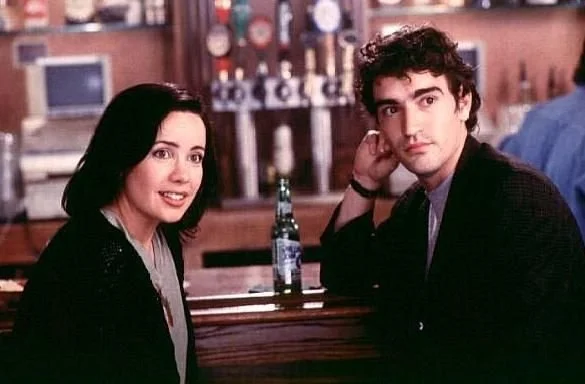
Look away, she’s hideous!
Anyway, in this film, the subterfuge is less ‘I’m too ugly to date Ben Chaplin’ and more ‘I want people to think I survived the Holocaust when I didn’t.’ That’s right people, the premise is that Eleanor (the apparently great) somehow accidentally joins a Holocaust survivors support group and uses the memories of her dead best friend in order to join in. Friends, we’ve been on a wild cinematic journey this year, and this one just about takes the biscuit.
My main issue with this classic plot device is I just have a really hard time believing the person in question would a) get themselves into this situation and b) not take the really obvious route out of it as soon as possible. There’s a scene in Cats & Dogs where Ben tries to woo Janeane from outside her flat, and to make sure he doesn’t realise she’s not Uma Thurman she covers her face in mayo and tells him it’s a pore minimising mask. All I’m saying is I would definitely be exiting the subterfuge before having to cover my own face in mayonnaise at 1am, but that’s just me.
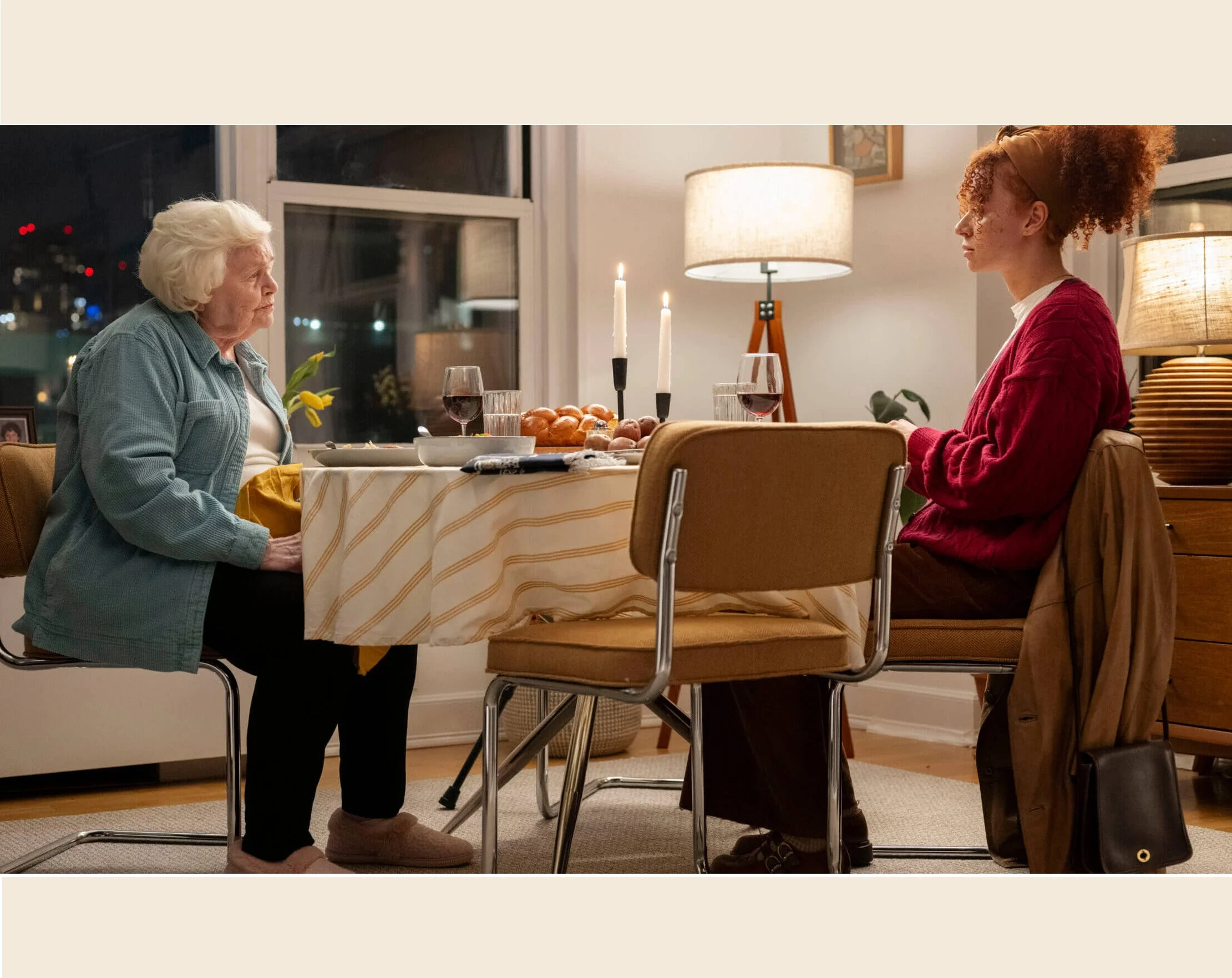
It’s absolutely normal to invite a journalist to dinner who wants to interview you about surviving the Holocaust you weren’t in, just because you’re lonely
The mayo equivalent in this film is a persistent student journalist, who not only somehow gains permission to attend the Holocaust survivors support group in search of a story, but also chases Eleanor out of it asking for an interview. When Eleanor - quite understandably, even leaving aside the fact that she’s made the whole thing up - gives a very emphatic no to this request, the plucky journalist not only asks again, but also somehow manages to obtain her contact details. ‘You’re very persistent’ Eleanor tells her later, having for some absolutely bizarre reason had a complete 180 and decided to invite the journalist round for dinner. We’re given some thin motivation about loneliness but I’m sorry, why would you invite a journalist over to dinner, in order to be interviewed about the Holocaust experience you MADE UP, just because you’re lonely. And why - WHY - would you pursue someone you think is the survivor of a horrible trauma, when they have repeatedly asked you not to?
As is so often the case, no one in this film really makes sense.
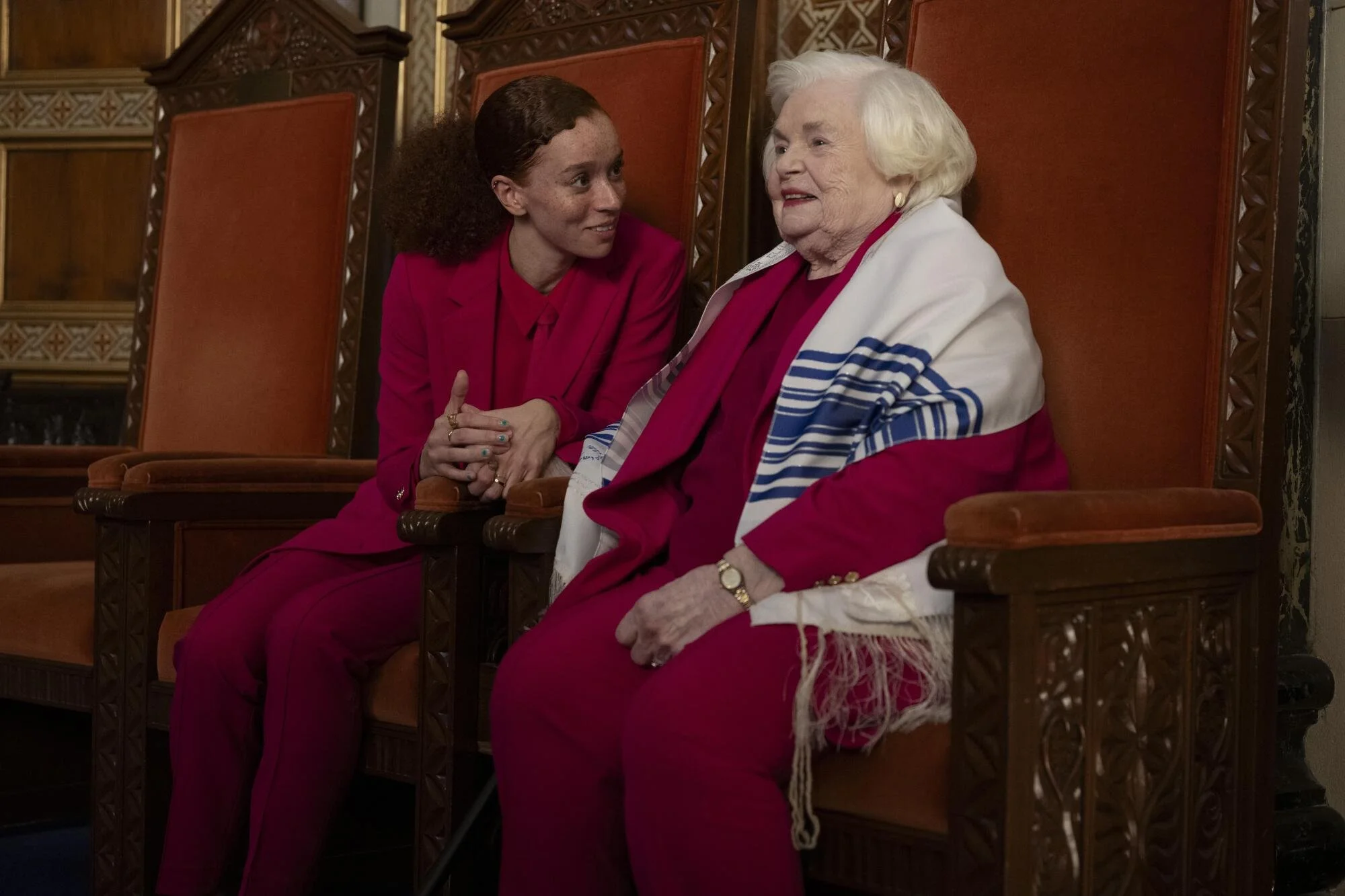
It’s giving Butlins Bat Mitzvah
It’s a bit of a shame, because I was actually quite taken by the premise. From Fight Club to About a Boy, support groups and people’s varied motivations for attending them are a rich seam, and there could have been a weird an interesting film about why someone would pretend to have survived the Holocaust in order to attend one. I entirely agree with Erin Kellyman’s journalist that having a Bat Mitzvah in your 90s, because you were denied one in your youth, is such a great premise for a profile piece. I’m also slightly fascinated by the scene where she and Eleanor go and buy fairly insane matching red suits. I’m in my ‘what the hell do I wear, after an unholy cocktail of pregnancy, childbirth, breast feeding and sleeplessness has screwed up my body’ era, and I sort of want to buy an insanely bold red suit and tell everyone to sod off. Good for them.
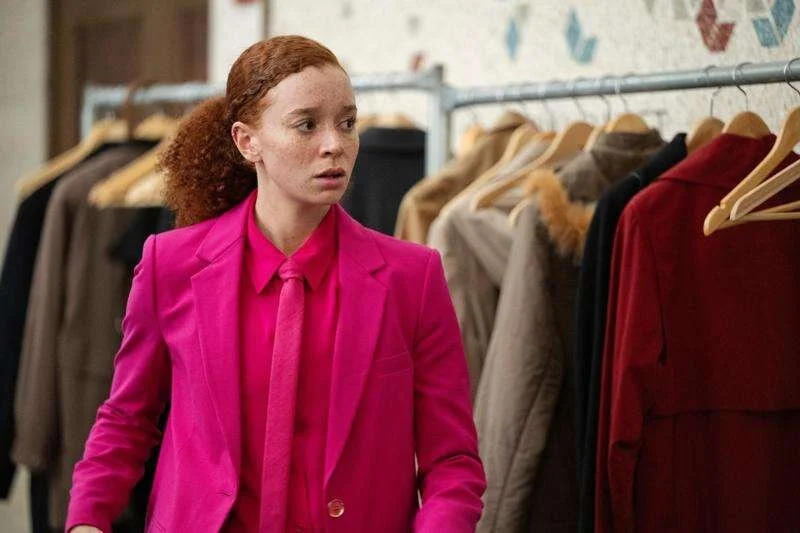
Another moment for the mad suit
The way this all turns out is entirely predictable. It’s all a terribly embarrassing misunderstanding, then it all gets quite serious, then the truth inevitably comes out (do they really believe it won't??) and the mark, in this case the student journalist, is deeply upset, before totally inexplicably deciding it’s actually all very understandable after all. (This bit in particular never rings true. I’m sorry, but if you’re Ben Chaplin the memory of that mayo mask is never leaving you. As if you could ever lean close to Janeane ever again knowing she once did that to her face.)
The best thing about this film is Rita Zohar as Eleanor’s friend, whose loss at the start of the film gives us some apparent motivation for the high jinx that follows. Her concluding monologue, in which she unburdens herself of her trauma to Eleanor, is a brilliant ending, and it does give the plot a long overdue feeling of authenticity. My googling reveals that she was born in a concentration camp, and that all the characters depicted in the support group are also real life survivors of the Holocaust which, honestly, given the flippancy of the plot, makes me feel a little bit weird.
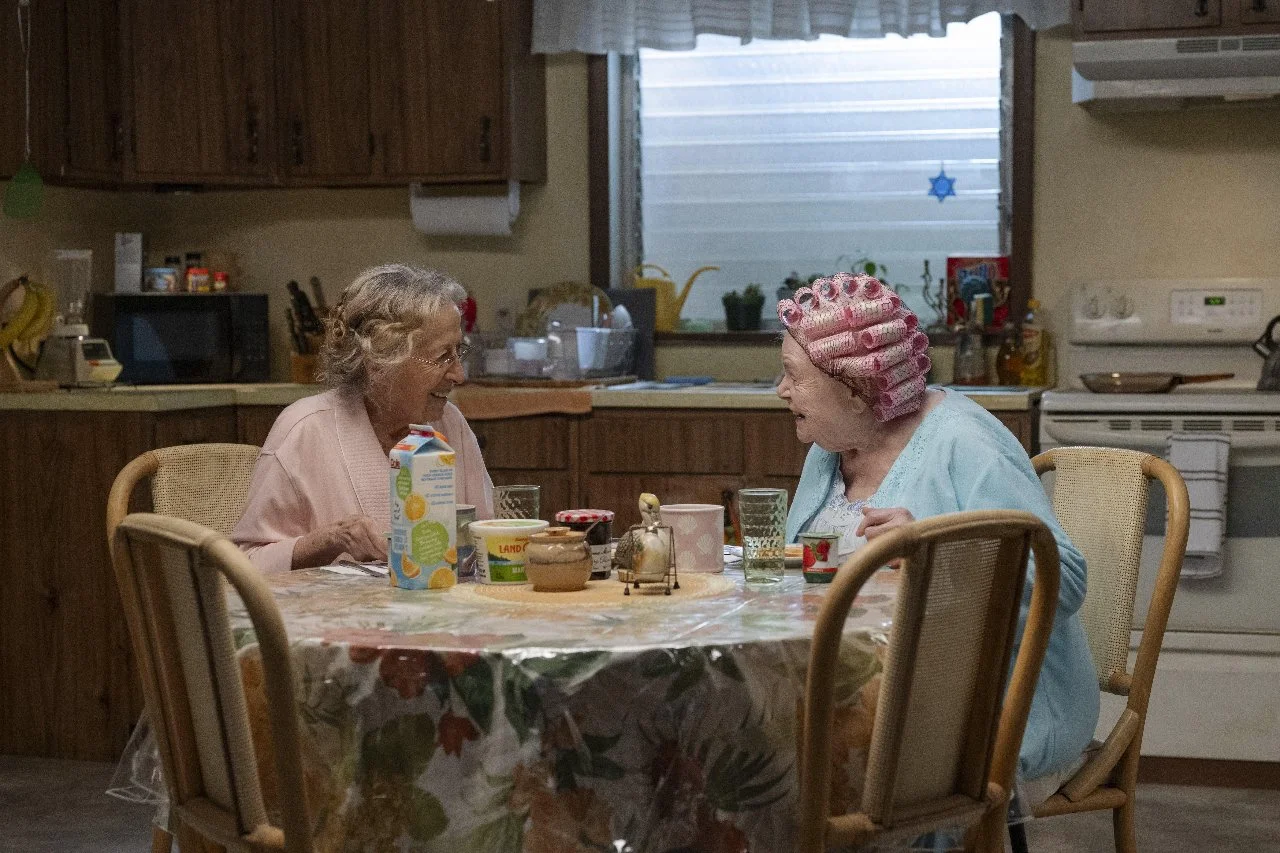
June and Rita
Look, we went into this one feeling fairly trepidatious, and I did have a better time than expected - largely thanks to that ending, and the fact that it all clearly means well. I still think, though, it’s a bit weird to make a comedy drama out of pretending to be a Holocaust victim, no?
Good things: It does all mean well, and the space that monologue is given at the end is great
Bad things: Is the suit bad? Is it amazing? I can’t stop thinking about it.
My review: I feel like I’ve seen it before, but with more mayo
Lily’s review: One poo, as per Nuremberg
Next week: The Holiday. Christmas is coming!